

Tax time in Australia rolls around every year from July to October, and while it might not be your most enthusiastic date on the calendar, it is one of the most important for your financial health.
The end of the Australian financial year is June 30, with a new financial year starting on the 1st of July – but don’t stress if you’re reading this in July. While the tax year technically ends after June, this date marks the recorded period of income and outgoings, and not the date to submit your tax return.
Whether you’re an employee, freelancer, sole trader or small business owner, lodging your tax return accurately – and on time – helps you stay compliant with the ATO, avoid penalties and possibly even score a refund. But taxes and tax returns are rarely simple. Best Financial Planners is a group of expert financial advisors, helping our clients sift through the mud and confusion of all things finance, including the complexities of tax.
Our expert team has put together a guide that will cover how to lodge your tax return across a range of income types, what documents you need and extra tasks to tick off during tax season.
When do you need to lodge your tax return by?
The standard tax return period in Australia runs from 1 July to 31 October each year, which means the deadline to submit your tax return through MyGov is October 31. During this time, individuals can lodge their return for the previous financial year, covering income earned from 1 July to 30 June. So, this year your tax return will cover your income from the 1st of July 2024 to the 30th of June 2025. If this date falls on a weekend (in 2025, it’s a Friday), the deadline typically extends to the next business day.
Using a registered tax agent gives you extra time to lodge your return, often until 15 May of the following year. This is a great approach to give you more time, especially if you have a more complicated tax return to lodge, like a dual income, an income plus investments or if you’ve moved out or into the country in the financial year. But there’s one catch – you must be registered with your tax agent by 31 October to qualify for this extended deadline. If you’re late engaging an agent or you have overdue returns, your due date may be brought forward.
Who needs to lodge a tax return?
Most working Australians are required to lodge a tax return, including:
- Employees – if you’ve had tax withheld from your wages, you need to lodge a return – even if your total income is below the tax-free threshold. If you believe you paid the correct amount of tax, you still need to lodge a tax return to have this checked
- Sole traders and freelancers – if you’re running a business or doing contract work, you’re required to report all income and claim deductions formally through your tax return. For most people working in this capacity, their tax return is very important because their income fluctuates throughout the year
- Investors – if you’ve earned income through shares, rent, property, crypto or dividends, you’ll need to include that in your return
- Individuals who received government payments or Centrelink benefits – especially if tax was withheld
- Anyone who earned above the tax-free threshold – $18,200 for most residents
If you didn’t work or earn any income, you may need to submit a non-lodgement advice to let the ATO know you’re not required to lodge.
Here’s a step-by-step guide to lodging your tax return in Australia
The amount of time and energy that will go into lodging your tax return depends on how much prep you do. If you’ve stayed organised with your documents and receipts throughout the year, the process is usually smooth and straightforward. This step-by-step guide will walk you through how to lodge your tax return, including everything you need to know to get it done right, for first-time lodgers or seasoned tax return pros alike.
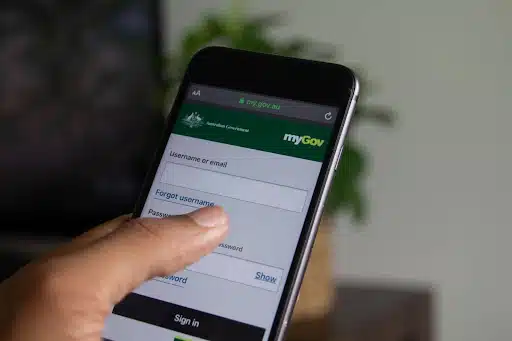
1. Gather your documents
Once you gather everything needed, including all financial documents, it’s much more straightforward to lodge your tax return accurately. This ensures you don’t miss any income or deductions – and helps speed up the refund process. Here are the documents you need:
Income statements or PAYG summaries
Most employers now report directly to the ATO, so your income statement will likely already be available through your MyGov account. However, if you’ve had multiple jobs or income sources, double-check that everything has been reported correctly, and if it hasn’t, request and gather the documents from your employers and upload them into MyGov.
If you’re a freelancer, contractor or sole trader, this part is a little more complicated. You need to gather all of your invoices and calculate the total sum of income from your work, uploading the documents into MyGov.
Bank interest, dividends and investment income
Any income earned from savings accounts, rent, shares, managed funds or other investments needs to be declared. You should receive annual summaries from your financial institutions or investment platforms. If you haven’t received or can’t find your summaries, you can request them through the investment platform or the respective supporting agencies, like a real estate agent for rent summaries.
Receipts for business expenses & deductions
One of the more time-consuming tasks of lodging your tax return is gathering the supporting evidence for your expenses and deductions. Review the ATO’s extensive list of deductible expenses to make sure you’re claiming deductions on everything you can – this will minimise your income tax and maximise your return. There is a wide range of services and products that are included, including tax-deductible financial advisor fees. To claim deductions, you will need supporting evidence through receipts and invoices, so keeping a folder of receipts throughout the year can save you a lot of time and hassle during tax time.
Private health insurance statement
If you have private health cover, you’ll need the statement from your insurer to complete your return. It also helps determine your eligibility for the private health insurance rebate and whether you’re liable for the Medicare Levy Surcharge, which comes into effect for people aged 31 and above.
2. Choose a lodgement method
There are several ways to lodge your EOFY tax return in Australia, each comes with its own set of pros and cons and is more suitable for certain tax scenarios than others.
MyGov & ATO online portal
Ideal for individuals with simple tax landscapes, like single-stream incomes and those who held only one job throughout the financial year. The ATO’s online service, MyTax, is free and pre-fills much of your information, including income and health insurance details. You’ll need to link your MyGov account to the ATO if you haven’t already. First-time lodgers will have to do a bit of work to enter any details that aren’t automatically filled in, but seasoned lodgers will have a much smoother ride with most personal details already accurate.
Registered tax agent or accountant
If your finances are more complex – think investment properties, business income, capital gains, job switches, voluntary super contributions or you’ve returned to Australia after living overseas – a registered tax agent can help you make sense of your tax requirements. They ensure you’re compliant and may help you find deductions you’d otherwise miss. Keep in mind there’s a fee, but it’s often tax-deductible. Try to find an agent familiar with your local requirements. So, for Victorian residents, choose an accountant in Melbourne, for example.
Paper lodgement
This method is still available but is used only in limited circumstances, like for people who are not comfortable with digital platforms or have specific lodging needs. It’s slower and more prone to errors.
| Method | Pros | Cons |
|---|---|---|
| MyGov / MyTax | Free, fast, pre-filled with your details and easy to use. Great for people with simple lodgings. | May not suit complex tax scenarios |
| Tax Agent | Professional advice, maximises deductions and extends the deadline. Helpful for those with complex tax scenarios. | Comes with a (tax-deductible) cost and must register early |
| Paper Lodgement | Non-digital option | Slow, risk of errors. Not recommended |
Table 1: Summary of pros and cons of different ways to lodge tax return
3. Lodge the return
Once you’ve gathered your documents, log into your MyGov account and access the ATO services. From there, you can begin your return. Most fields will be pre-filled with data from your employer, banks and health insurer. But even though data is pre-filled, mistakes can happen and you should always check your income matches your payslips, add any missing income (side hustles, freelance gigs, etc.) and enter your deductions carefully, backed by receipts.
Some things are easier to miss than others, so here are common mistakes to avoid:
- Forgetting to include bank interest or dividends
- Claiming work deductions without proof
- Overestimating home office claims without a clear calculation method (for things like bills that get split against your work hours, use the provided formulas)
- Missing passive income or income from gig economy work (Uber, Airbnb, bank interest etc.)

4. Confirm submission and track your refund
Once submitted through MyGov or a tax agent, you’ll receive a confirmation from the ATO. In MyGov, your return status will show as ‘Processing’. Most electronic returns are processed within 2 weeks, but paper returns can take up to 10 weeks.
To keep track of your return:
- Log in to MyGov and go to the ATO portal. They click ‘View my tax return’
- Check the return’s status (e.g., In Progress, Finalised)
- The ATO will also notify you once your Notice of Assessment is ready
What else should you do at tax time?
Lodging your EOFY tax return is the more formal part of tax time. But the season is also a valuable opportunity to get your finances in order, maximise your deductions and plan ahead for the new financial year while your financial accounts and circumstances are still fresh in your mind. Here’s what else you should consider doing at tax time:
Check up on your finances and debt
Tax time is the perfect moment to take stock of your overall financial health. We know it’s sometimes stressful to check your total loan balances, but it can really help you understand how to prioritise your budget for the best financial outcomes.
Review how you’re tracking toward goals like buying a home, paying down loans or building emergency savings. Take a look at what you earned and spent over the year and identify areas where you might cut back or reallocate funds. For example, if you find that most of your disposable income is being used for unnecessary spending, you might wish to pay off debts faster instead.
Check and consolidate your superannuation
Your super is a long-term investment, but short-term attention can help boost that investment. One of the easy wins with super if you have multiple accounts, is consolidating them to reduce fees and simplify your super. You should also check if your employer is paying the correct amount and whether your contributions have been processed correctly, which will help you with proactive retirement planning.
Plan for the year ahead
A little preparation now can make next year’s tax time a breeze, especially now that you can see your annual financial landscape so laid out. Firstly, if you don’t already, set up a system for tracking receipts and deductions – you can use apps, folders or cloud storage to organise everything throughout the year. This will help remove the headache of finding and consolidating all our dedication evidence when next year’s tax time rolls around.
Tax time: a return to your financial portfolio
If you’re a finance geek like us, tax time is a super rewarding and fulfilling time of the year to bring order to your financial life. But, we understand this isn’t the norm! However you feel about tax time, the MyGov platform really does streamline the process for us, and it only gets easier year on year, when we fill in more details that carry through to the following year. And, there is always the option to engage with a helpful tax agent to work through the complications of more complex tax scenarios. Whichever approach you take, the key is to start early, stay organised and take the time to understand what you can claim.
But remember: tax time isn’t just about submitting forms. It’s a valuable annual check-in with your finances – consider it a return to your financial portfolio and a great time to make any necessary changes that will help you stay on track to retire at 65. From reviewing your income and expenses to consolidating your super and planning for the year ahead, tax season is your opportunity to reset and refocus.
If you’re feeling overwhelmed or unsure where to start, Best Financial Planners is here to help you with any financial questions and set you up for a more confident financial year ahead. You can access learning resources in our Hints & Tips or speak with a financial advisor in Melbourne, Sydney or wherever you’re located to optimise your financial wellbeing.